
 +971 44 37 6484

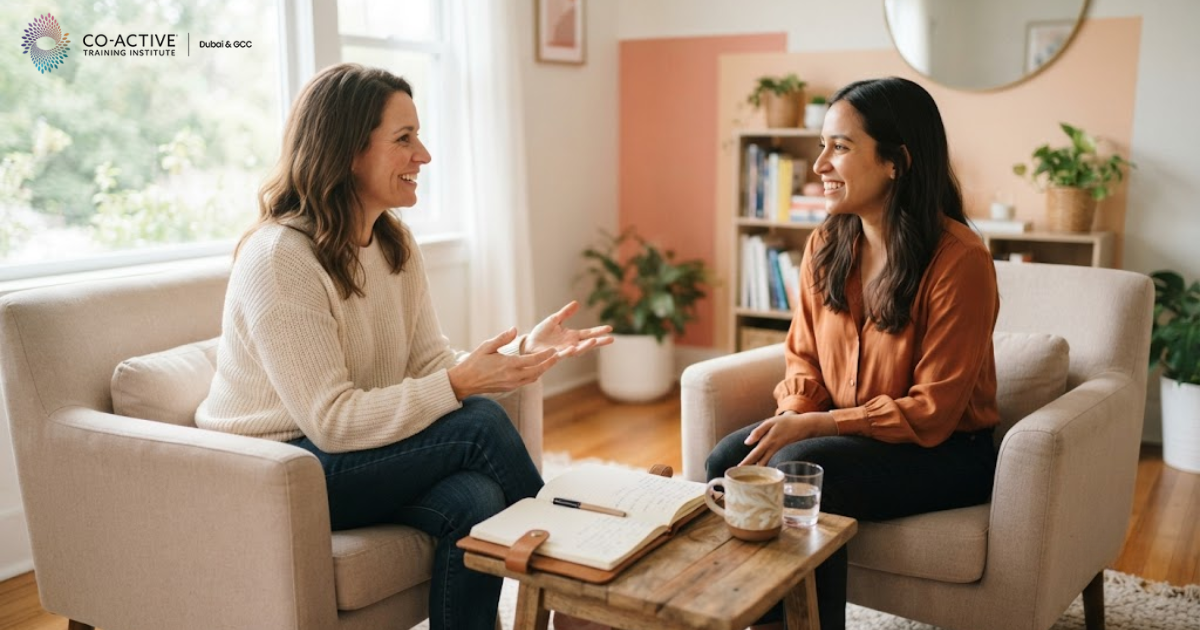
A life coach helps you set goals, break through obstacles, and turn intention into action — working with where you are now, not your past. Here's what a life coach really does, how it differs from therapy, and how to become one in Dubai.
A life coach is a trained professional who helps you set meaningful goals, overcome obstacles, and make lasting changes in your personal or professional life. Unlike a therapist, who often explores the past, a life coach works with where you are now and where you want to go.
Through focused conversations and powerful questions, a coach helps you find your own answers, build a clear plan, and stay accountable to it. Life coaches support people with career changes, confidence, relationships, leadership, and life balance. Good coaches are trained and certified through bodies like the International Coaching Federation (ICF).
At the Co-Active Training Institute (CTI) in Dubai, we offer coach training, life coach certification, and accredited coaching courses. In short, a life coach is a partner who helps you close the gap between where you are and where you want to be.
What Does a Life Coach Actually Do?
A life coach guides you through a structured conversation that turns vague wishes into clear, reachable goals. They do not hand you answers or give orders. Instead, they ask sharp questions, listen closely, and help you see your own situation more clearly, so you decide the way forward.
The real work happens between sessions, and the coach keeps you accountable for it. A typical coaching relationship runs for around four to six months, long enough to build new habits and see real change. The coach brings focus, honesty, and support; you bring the goals and the effort. A life coach helps you turn intention into consistent action.
How Is a Life Coach Different From a Therapist?
This is the most common question, and the difference is important. Both help people, but they work in different ways and for different needs. Knowing the difference helps you choose the right support.
| Life Coaching | Therapy |
|---|---|
| Focuses on the present and future | Often explores the past |
| Sets and pursues goals | Heals and treats conditions |
| For people who are functioning well | For mental-health concerns |
| Built on action and accountability | Built on understanding and recovery |
What Areas Can a Life Coach Help With?
Life coaching covers almost any area where you want growth or change, which is why the field is so broad. Coaches often focus on a particular niche.
Whatever the goal, a coach helps you move toward it with a clear plan.
Do Life Coaches Really Work?
Coaching is not just a feel-good idea; its results are measured in research. Studies by the ICF show strong, consistent benefits for people who work with a coach. The evidence is clear.
These are not small numbers; they show coaching creates real, felt change. Proven results are why coaching keeps growing worldwide.
How Big Is the Coaching Profession?
Life coaching has grown from a niche idea into a global profession, which speaks to how much demand there is. The scale of the field today is significant.
Coaching is now one of the world's fastest-growing professional fields. This growth shows both strong client demand and real career opportunity.
Do You Need Certification to Be a Life Coach?
Technically, life coaching is not a regulated profession, so anyone can use the title. But that does not mean training is optional, because clients and employers increasingly expect it. Certification is what separates a credible coach from an amateur.
ICF research shows 73% of coaches agree that clients and organizations expect them to hold a coaching certification, and around 85% of clients prefer to work with a certified coach. The ICF is the leading global body for coach accreditation. Completing an accredited program, such as our CPCC certification, gives you the skills and the credibility that clients look for. In practice, proper certification is essential to build trust and a real coaching career.
What Makes a Great Life Coach?
Not every coach is equally effective, and the best ones share a clear set of qualities. These come from training and practice, not just personality. Knowing them helps you choose or become a strong coach.
Great life coaches listen deeply without judging, ask questions that create insight, and hold clients accountable with care. They work from a proven method rather than guesswork. The Co-Active coaching model, for example, treats the client as naturally creative, resourceful, and whole, and our Co-Active coaching in Dubai programs teach exactly that. Skills like emotional intelligence also set the best coaches apart. Real skill, built on a trusted model, is what makes a coach effective.
How Do You Become a Life Coach?
Becoming a life coach follows a clear path, and getting each step right sets up a strong career. It starts with quality training, not just enthusiasm.
Complete accredited training
Start with a recognised, ICF-accredited coach-training program to build a real skill foundation.
Practise with real clients
Apply what you learn in live coaching hours to sharpen your questions, listening, and presence.
Earn a recognised certification
Complete a credential such as the Certified Professional Co-Active Coach to formalise your skill.
Apply for an ICF credential
Many coaches then pursue an individual ICF credential, such as the ACC or PCC, as a separate step after training.
Following this path builds both your skill and your professional standing.
Why Train as a Life Coach With Co-Active in Dubai?
If you want to become a coach, the quality of your training shapes your whole career. The Co-Active Training Institute is one of the most established names in the field, and we bring that experience to Dubai.
According to CTI, we are the oldest and largest coach-training school, and we have trained more than 140,000 coaches and leaders worldwide. Our Co-Active Coach Certification is accredited by the ICF, and we have taught in Dubai since 2005. That mix of a proven method, global reputation, and local presence gives you a strong foundation. Training with an established, accredited institute gives your coaching career the best start.
Start Your Coaching Journey
Whether you want to hire a life coach or become one, the first step is a clear one. Our Fundamentals course is the ideal introduction to Co-Active coaching, and it comes with a 100% satisfaction guarantee, so you can experience the method before going further.
Coaching income and success vary from person to person and depend on your effort, niche, and how you build your practice, so we focus on giving you the skills and credibility to succeed. If you are ready to explore coaching as a client or a career, our team can guide you to the right course and answer your questions.
Frequently Asked Questions
What is a life coach?
A life coach is a trained professional who helps you set goals, overcome obstacles, and make positive changes in your personal or professional life, using focused questions and accountability rather than giving direct advice.
What is the difference between a life coach and a therapist?
A life coach focuses on your present and future goals and suits people who are functioning well. A therapist addresses mental-health concerns and often explores the past. Coaching is not a substitute for therapy.
Do you need a certification to be a life coach?
It is not legally required, but 73% of clients and organizations expect a credential, and around 85% prefer certified coaches. An accredited certification builds the trust needed for a real career.
Do life coaches actually work?
ICF research shows strong results: 80% of clients report improved confidence, 73% report better relationships and work performance, and 99% are satisfied with their coaching experience.
How do I become a life coach in Dubai?
Complete an accredited coach-training program, practise with clients, and earn a certification such as the CPCC. Many coaches then pursue a separate ICF credential to strengthen their standing.
Ready to start your coaching journey with the Co-Active Training Institute? Explore our Fundamentals course and certification path in Dubai — backed by a 100% satisfaction guarantee.